
The Laboratory of Bioorganic and Peptide Chemistry develops and studies synthetic peptides with a particular interest in self-assembling systems. We mainly focus on double-helical peptide nucleic acids and triple-helical collagen peptides. We exploit these systems as platforms for developing proximity-driven chemical reactions and as molecular tools for studying biomolecular interactions. Our endeavors in the field of proximity labeling produce probes for tailored editing of biomolecule structures, aiming to answer pressing questions in neurobiology. The laboratory has multidisciplinary expertise in organic synthesis, automated peptide synthesis, physical-organic chemistry, peptide biophysics, chemical biology, all the way to neuroscience. As toolmakers, we love to collaborate to bring our chemical probes into practice.
Research Projects
New proximity-driven chemical reactions
Classical bi-molecular reactions are slow at low concentrations and fast at high concentrations. However, forcing the two reagents in close proximity may increase the reaction rate by orders of magnitude despite their low nominal concentration. We use self-assembling peptides as platforms for developing new reagents that are stable in aqueous buffers in the presence of other biomolecules but rapidly react with target functional groups in an induced-proximity setting. We then develop these reagents into warheads for targeted modification of biomolecules (vide infra).

Traceless affinity biomolecule modification
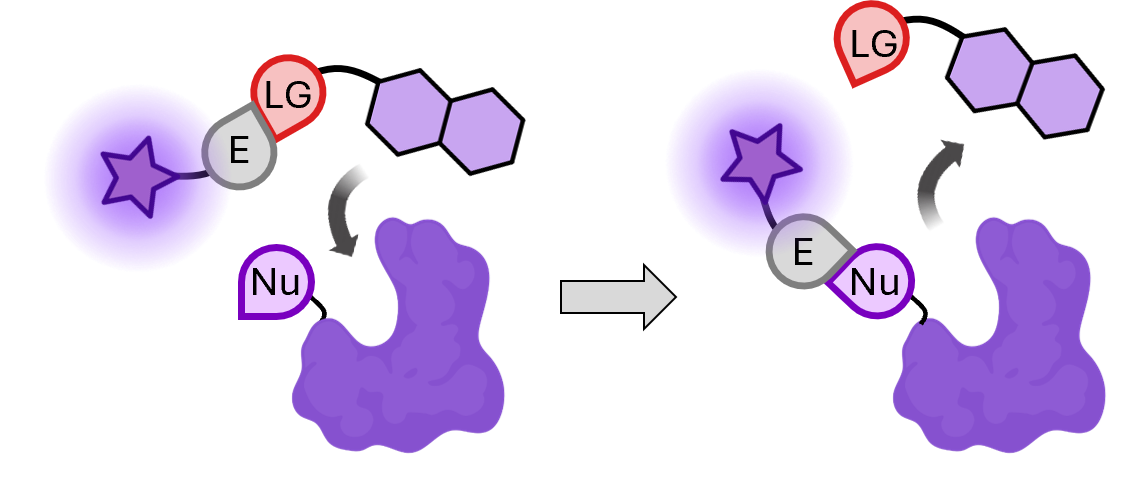
Nature has evolved enzymes to chemically modify the structures of biomolecules. We aim to achieve what enzymes do (and beyond!) with purely synthetic probes, without genetic manipulation. We draw inspiration from the ligand-directed chemistry technology developed by Itaru Hamachi which combines a targeting ligand, a linker, and a reactive warhead to enable traceless protein modification. Our probes focus on labeling and manipulating post-translational modifications of proteins relevant to neurodegenerative diseases. We also collaborate with biology-oriented groups to design probes tailored to their targets and scientific questions.
Synthetic collagen triple helices
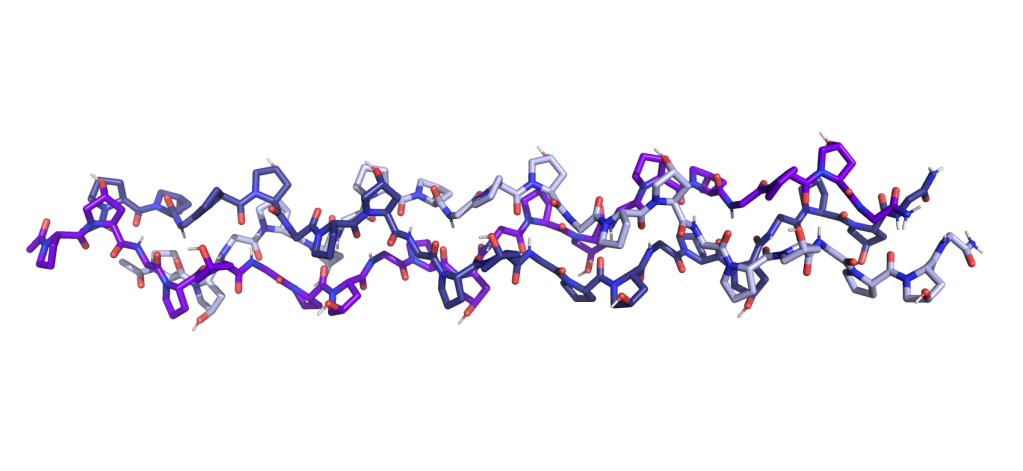
Collagen is one of the most abundant mammalian proteins. It has a fascinating tertiary structure where three peptide strands supercoil into a triple helix. We mimic the triple-helical structure of collagen with synthetic self-assembling peptides. Ultimately, we use these collagen model peptides (CMPs) as trimerization domains to study biomolecular interactions and proximity effects in ternary systems.
 Fiala Lab